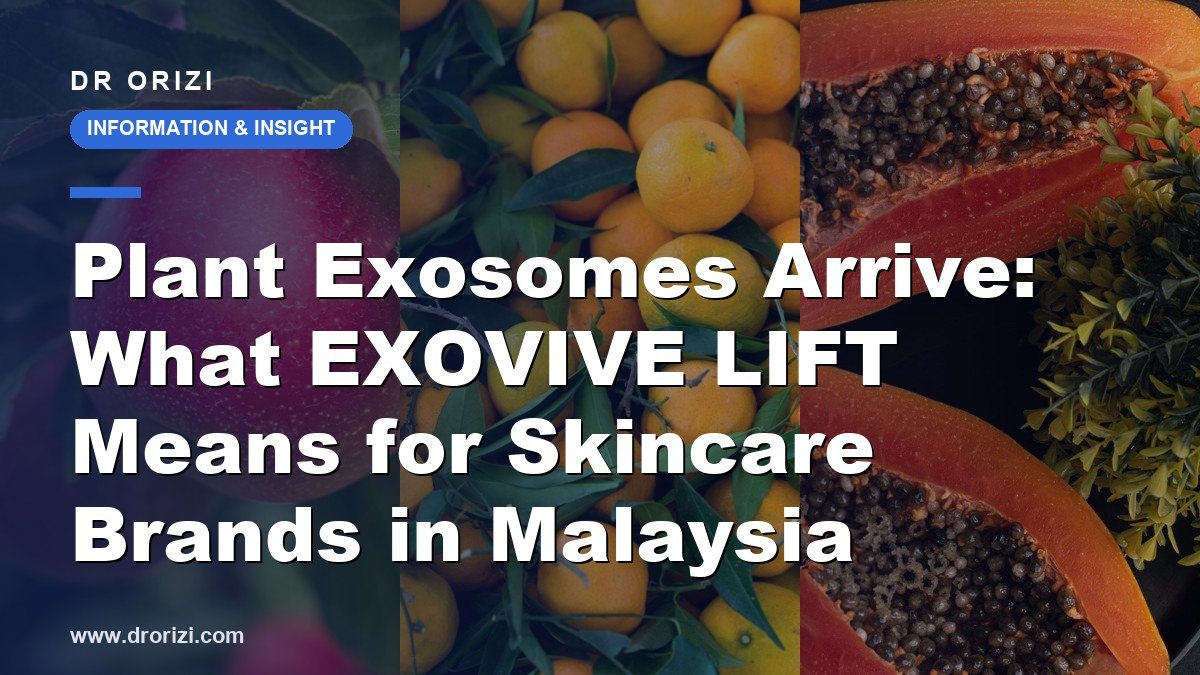
“Exosome” is the ingredient word of 2026 in skincare. The first plant-exosome active from one of the world’s largest ingredient suppliers shows what that word should mean on a formula sheet — and on a Malaysian label.
Written & researched by Norpadilah Abd Latif, Chemist & Cosmetic Formulation Contributor, Dr Orizi · Reviewed by Creaton Poh · Published by Dr Orizi (M) Sdn. Bhd., ORIZI Group · Last reviewed September 2026
Disclosure: This article is published by Dr Orizi and may refer to our own manufacturing experience and capabilities. Dr Orizi has no commercial or supply relationship with dsm-firmenich in connection with this ingredient and has not manufactured with it. External factual claims are supported by cited sources.
Quick Answer
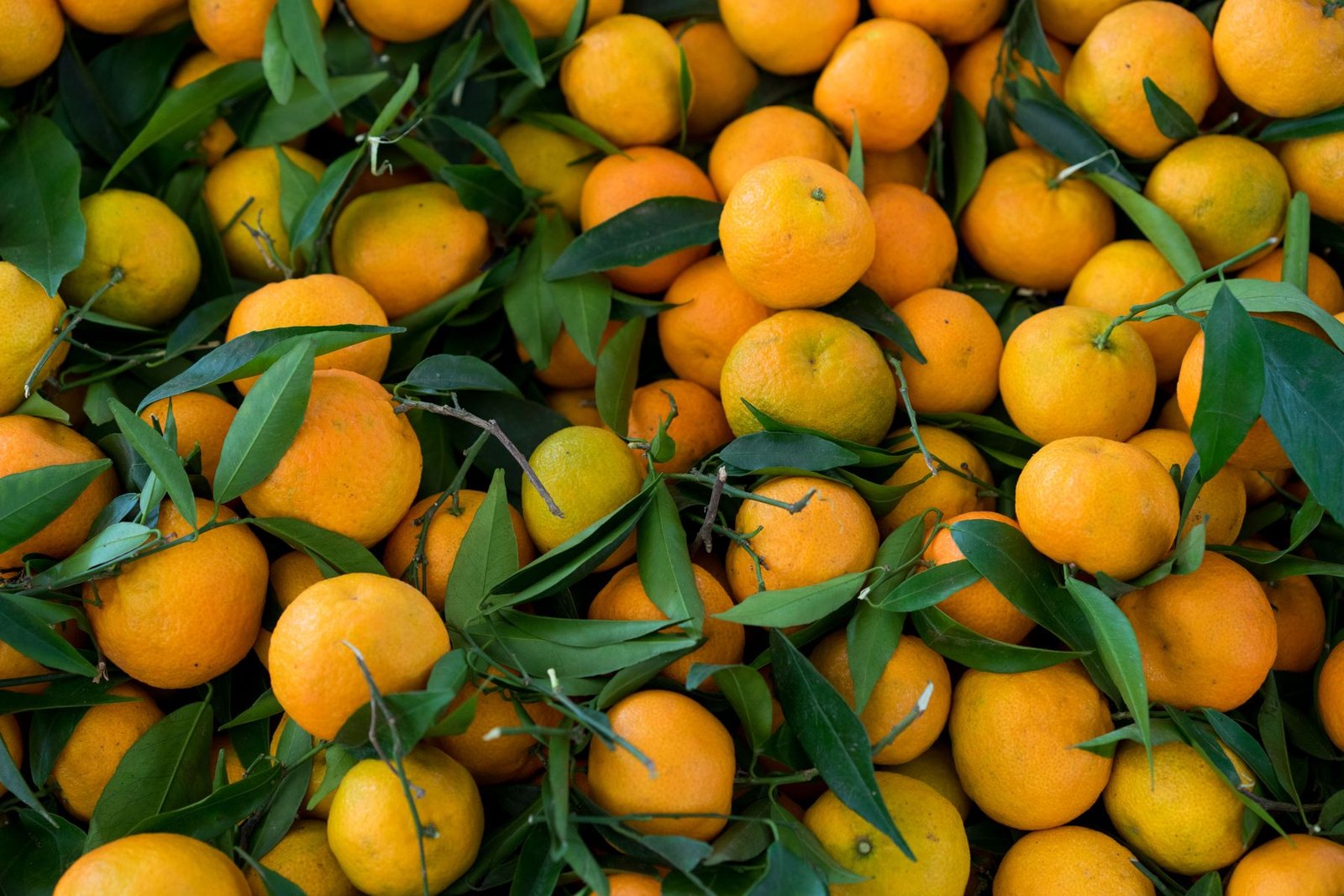
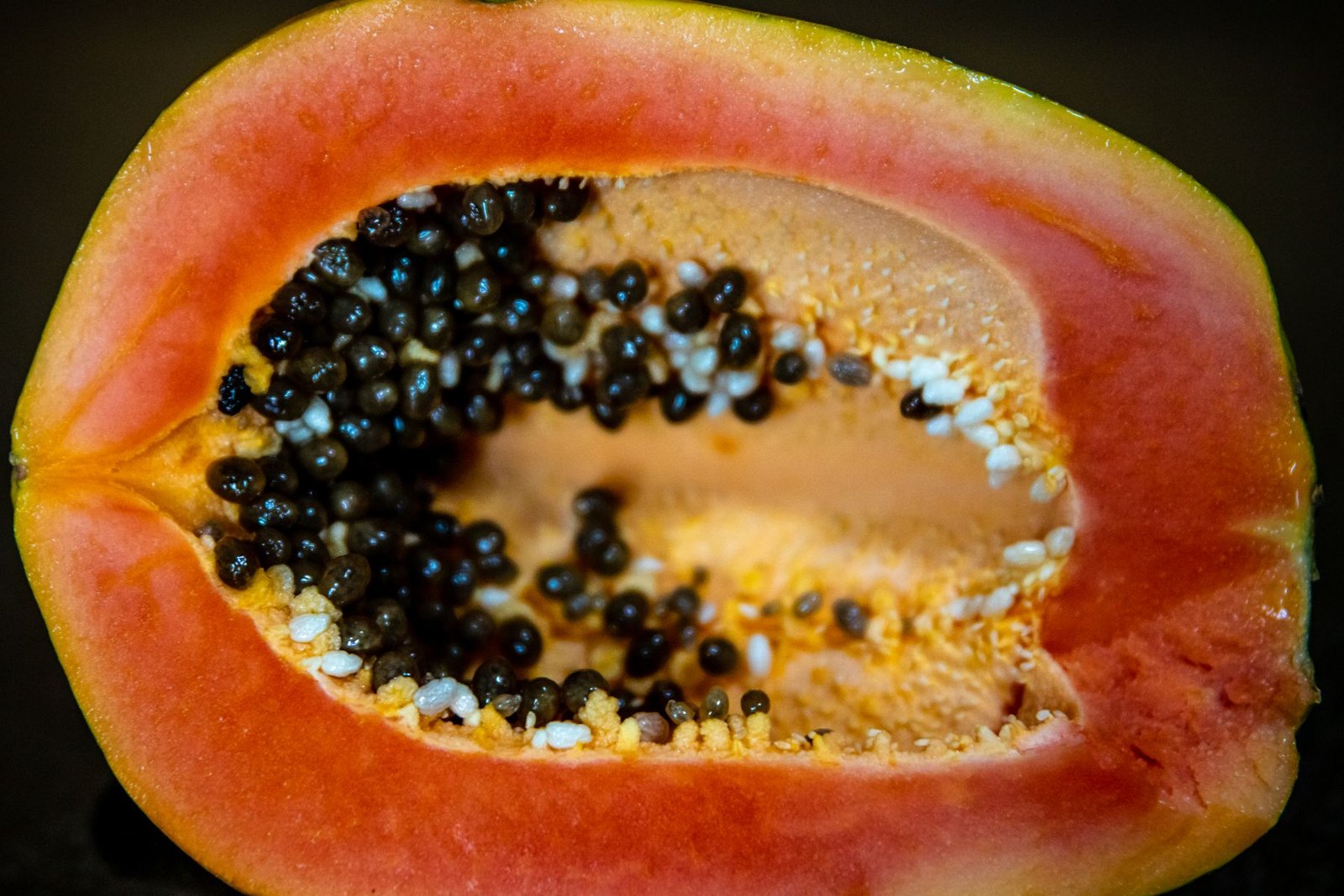
EXOVIVE™ LIFT is a plant-exosome anti-ageing active from dsm-firmenich. It is made from organic Italian apple, tangerine and papaya, and supplied as a water-soluble powder used at very low levels. It debuted at in-cosmetics Asia in November 2025, launched globally in April 2026 and won Bronze for active ingredients at in-cosmetics Global 2026. For Malaysian brands, plant-derived is the point: the ASEAN Cosmetic Directive bans “cells, tissues or products of human origin”, so human stem-cell exosomes are off the table. The label will list fruit extracts, not the word “exosome”.
Key Takeaways
- EXOVIVE™ LIFT (INCI: Malus Domestica Fruit Extract, Citrus Reticulata (Tangerine) Fruit Extract, Carica Papaya (Papaya) Fruit Extract, Maltodextrin) is a preservative-free powder, soluble in water and stable from pH 3.0 to 10.0.
- dsm-firmenich reports about four trillion plant-derived vesicles per gram, extracted physically without solvents, with EXOLAB Italia.
- In a two-month placebo-controlled study with 45 subjects per group, the supplier reports about 30% better skin elasticity, 15% less crow’s-feet wrinkle depth versus placebo and a wrinkle result it describes as eight years younger.
- The supplier’s in-vivo reference level is 0.026%. At that level, weighing and dispersion accuracy matter more to the finished product than cost does.
- Dr Orizi has not produced with this ingredient. This is our formulation and regulatory reading of public supplier information.
Scope of this article
This article covers leave-on skincare notified as cosmetics in Malaysia under the ASEAN Cosmetic Directive through the National Pharmaceutical Regulatory Agency (NPRA). It is written for brand owners considering an “exosome” product in 2026. It does not cover aesthetic-clinic or injectable exosome treatments, which are regulated outside the cosmetic framework.
What is a plant exosome?
A plant-derived exosome, more precisely a plant-derived extracellular vesicle, is a tiny membrane-bound particle released by plant cells that carries lipids, proteins, small RNAs and plant metabolites. dsm-firmenich describes them as “microscopic delivery systems used by plant cells to exchange essential nutrients and genetic instructions” in its launch press release of 10 April 2026.
The distinction that matters for a brand is between plant, microbial and human sources. Many of the exosome products that made the term famous in Korean aesthetic skincare come from human stem-cell culture. In ASEAN, those are not a cosmetic option: entry 415 of Annex II of the ASEAN Cosmetic Directive lists “Cells, tissues or products of human origin” among substances that must not form part of a cosmetic. A plant-derived vesicle carries no such restriction, which is why the major suppliers are moving here first.
What does dsm-firmenich publish about EXOVIVE™ LIFT?
| Attribute | Published by the supplier |
|---|---|
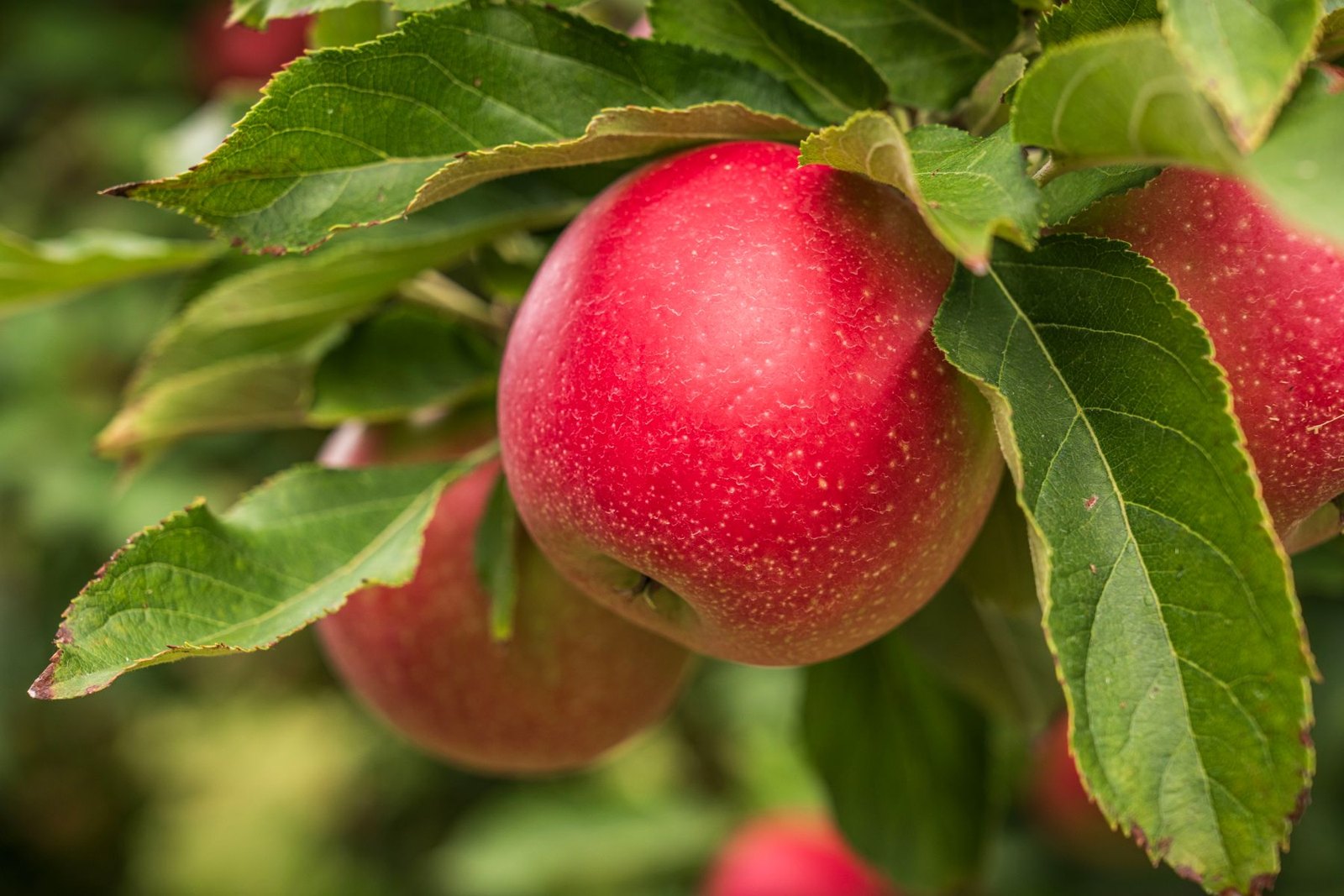
| Source fruits | Alpine apple, Mediterranean tangerine, Sicilian papaya; organic, from Italian fruit cooperatives |
| INCI | Malus Domestica Fruit Extract, Citrus Reticulata (Tangerine) Fruit Extract, Carica Papaya (Papaya) Fruit Extract, Maltodextrin |
| Form | Water-soluble powder, preservative-free; about 4 trillion vesicles per gram |
| Use level | 0.026% (level used in vivo) |
| pH range | 3.0–10.0 |
| Process | Physical extraction, no solvents; developed with EXOLAB Italia; carbon footprint 14.5 kg CO2-eq/kg; readily biodegradable |
| Clinical (2 months, placebo-controlled, 45 per group) | Elasticity about +30% (+33% vs placebo on the product page); crow’s-feet wrinkle depth −15% vs placebo; wrinkle result described as “8 years” younger (4 years at one month) |
| In vitro | Collagen type I +90%; more than 200 proteins modulated in skin tape-strip analysis; vesicles imaged entering fibroblasts (3 hours) and gathering near the nucleus (13 hours) |
| Timeline | Debut at in-cosmetics Asia, Bangkok, November 2025; global launch April 2026; Bronze, Active Ingredients, in-cosmetics Global 2026 |
Sources: dsm-firmenich EXOVIVE™ LIFT product page; Personal Care Insights, in-cosmetics Global 2026 report. Halal status, maximum processing temperature and shelf life of the powder are not stated publicly.
How would a formulator handle an active used at 0.026%?
A use level of 0.026% means about 260 mg of powder in 1 kg of finished product. That changes the practical questions. Cost per unit becomes a minor issue, even if the price per kilo is high; accuracy and even distribution become the major one.
- Pre-dissolve, then add. We would not scatter 260 mg of powder into a 500 kg batch. The normal approach is to dissolve the powder in part of the water phase first, then dose that premix, so every jar gets its share.
- Add late and gently. A vesicle is a lipid-bilayer particle. Until the supplier confirms its tolerance, we would add it at cool-down and after high-shear homogenisation, rather than through heat and shear.
- Watch the surfactant load. Surfactants are designed to break up lipid structures. That makes cleansers and other high-surfactant rinse-off formats a poor fit, and it is a question to put to the supplier for any leave-on base containing solubilisers.
- Preservation still applies. The raw material is preservative-free as a dry powder. Once it is in a water-based product, the finished formula needs its own preservative system and challenge test, as any cosmetic does.
Which product formats suit it?
| Format | Fit | Why |
|---|---|---|
| Serum / ampoule | Strong | Water-based, low shear at the end of the process, matches the anti-ageing positioning |
| Essence / toner | Strong | Clear aqueous base; the powder dissolves without affecting clarity at this level (to be confirmed at bench) |
| Cream / gel-cream | Good | Works if added after emulsification and cooling |
| Sheet mask essence | Good | Fits the K-beauty exosome trend; check compatibility with the mask fabric and its preservative |
| Cleanser | Poor | Short contact time and high surfactant content work against a vesicle active |
What can a Malaysian label say about exosomes?
A Malaysian cosmetic label can describe how skin looks and feels; it cannot claim to restore or modify how skin cells function. NPRA’s Guideline for Cosmetic Claims asks whether a product “permanently restore[s], correct[s] or modif[ies] physiological function by exerting a pharmacological, immunological or metabolic action”. If it does, it is not a cosmetic. The same guideline accepts numerical claims only “if substantiated by relevant evidence”.
That shapes how the exosome story can be used:
- “Enters your cells”, “reaches the nucleus”, “reprograms skin” — supplier imaging is fine in technical and B2B material. On a pack or in consumer advertising, these phrases describe a change in cell function and invite objection.
- “8 years younger” — a supplier result on its test formula. A brand needs its own study on its own finished product before printing a number.
- “Visibly firmer, smoother-looking skin” — the safer territory, supported by an instrumental or expert-graded study on the finished product.
- “Plant exosome” in the product name — truthful only if the ingredient really delivers intact vesicles in the finished product, so keep the supplier’s characterisation data in the product information file. In some export markets, such as mainland China, promoting “exosome” effects is itself a compliance issue, according to the CIRS regulatory overview of exosome cosmetics.
The Dr Orizi perspective
Based on Dr Orizi’s cosmetics manufacturing experience, a brief that names a trending active needs one question answered before anything else: what the active actually is in INCI terms. With exosomes, that question does most of the work. “Exosome” covers human, plant, microbial and even fermented-lysate materials, and they sit in completely different regulatory positions. Our practice is to take any “exosome” brief back to three items:
- The source — plant or microbial is workable in ASEAN; human origin is not a cosmetic ingredient here.
- The evidence file — vesicle characterisation, the supplier’s study level and the study formula, so we can match the finished product to the data.
- The claim list — drafted within NPRA’s appearance-and-feel boundary, with a finished-product test planned for any number the brand wants to print.
This is how we handle new actives in general; we have not yet run it with EXOVIVE™ LIFT. Our manufacturing is done at our GMP cosmetic facility in Malaysia, and the formats discussed here fall within our OEM and ODM skincare services.
Limitations
- All performance figures come from dsm-firmenich. The public pages give the panel size and duration, but not the full protocol or the base formula.
- Halal status, maximum processing temperature and powder shelf life are not published. We would confirm all three with the local distributor before development.
- “Exosome” regulation is changing quickly across Asia. The position described here reflects public documents available in September 2026.
- The science on how plant vesicles act in human skin is still young, and the supplier’s mechanism work is largely in vitro.
Frequently Asked Questions
Are exosome skincare products legal in Malaysia?
Plant- and microbe-derived ingredients can be used in cosmetics notified in Malaysia, provided every component complies with the ASEAN Cosmetic Directive annexes. Ingredients of human origin, including human stem-cell-derived exosomes, are listed in Annex II as substances that must not be used in cosmetics.
Will the word “exosome” appear in the ingredient list?
No. The ingredient list shows the INCI names — here, the apple, tangerine and papaya fruit extracts and maltodextrin. “Exosome” is a marketing and technical description, and using it in a product name or claim should be supported by the supplier’s characterisation data.
Has Dr Orizi produced with EXOVIVE™ LIFT?
No. We have not manufactured any product containing EXOVIVE™ LIFT and have not run a trial batch. This article evaluates publicly available supplier and regulatory information.
Can we claim “8 years younger skin”?
Not on the strength of the ingredient alone. That result comes from the supplier’s test formula. NPRA accepts quantitative claims only when substantiated by evidence, which in practice means a study on your own finished product.
Does such a low use level make the product cheap to make?
The active’s cost per unit is likely to be small at 0.026%, but the finished-product cost is driven by the base, the packaging and any efficacy study the brand commissions for its claims. The low level mainly raises the importance of accurate dosing.
Is it suitable for a cleanser?
We would not recommend it. Contact time is short and surfactants can disrupt lipid-bilayer vesicles. Leave-on serums, essences, creams and sheet-mask essences are the natural formats.
Sources & references
- dsm-firmenich — EXOVIVE™ LIFT official product page — INCI, form, use level, pH, clinical and in-vitro data.
- dsm-firmenich — launch press release, 10 April 2026 — source fruits, 45-per-group study, positioning.
- Personal Care Insights — dsm-firmenich enters exosome beauty (in-cosmetics Global 2026).
- Personal Care Magazine — debut at in-cosmetics Asia 2025, Bangkok.
- Premium Beauty News — in-cosmetics Global 2026 award winners.
- ASEAN Cosmetic Directive — Annex II, list of prohibited substances (entry 415).
- NPRA — Guideline for Cosmetic Claims (Annex I, Part 8).
- CIRS Group — regulatory status of exosome cosmetics worldwide (March 2026).
Update history
September 2026 — First published.
Related from Dr Orizi and ORIZI Group: why a soothing gel is formulated to stay a cosmetic; ORIZI Group’s look at CALNEURIN®-SENSE, the chicory-root “feel-good” skin active; and why a skin-longevity brief is a claims decision before it is a formula.
Planning an exosome or longevity serum and want a formulation and claims view before you commit? See what we manufacture, learn about Dr Orizi, or contact our team.